ServicesAC Installation
AC Installation in Airway Heights
Our central air installs are sized from a load calculation for your house, set level on a pad and charged by measured readings instead of estimates. Equipment that is put in carefully lasts longer. Estimates on installations and replacements are free, and the quote is in writing before any work starts.
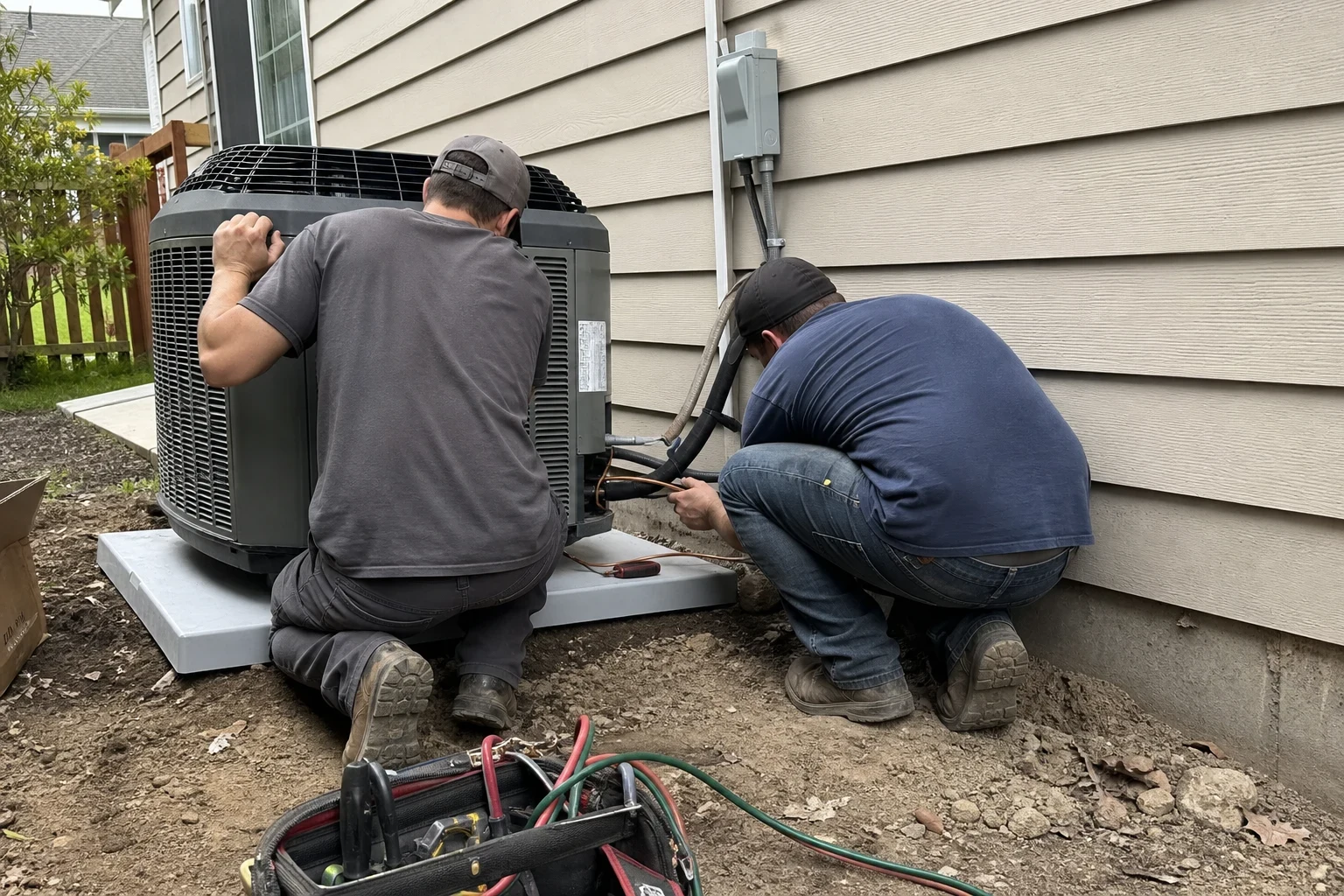
New Air Conditioning Set Up Right From Day One
When an air conditioner dies young, it usually was not worn out. It was too big, short on refrigerant or installed with moisture still in the lines. A unit that is too large cycles on and off, wears out its capacitor and contactor, and shuts off before it can remove humidity. A system that holds a vacuum and has the correct charge runs cooler and quieter, and it lasts longer.
A new install makes sense when the old unit cannot be fixed, uses R-22 refrigerant that is now expensive to get, or the house never had central air. If a repair is still the better choice, we tell you and send you to our AC repair service. For homes without ductwork, ductless mini-splits usually fit better, and a heat pump can cover both cooling in summer and heating in winter.
We hold a Washington license and bond and carry $1M general liability insurance, so the job at your house is covered.
Everything in an AC Installation
Sizing from a load calculation
We measure the rooms, windows, insulation and sun exposure, then run a Manual J load calculation. The tonnage comes from that result, not from the old unit's size or from square footage alone.
Outdoor unit and coil that match
The condenser outside and the evaporator coil inside have to be a rated pair to hit the efficiency printed on the label. We match them and adjust the furnace blower speed to the new airflow.
Nitrogen-brazed line set
We flush or replace the copper refrigerant lines and braze each joint while dry nitrogen flows through, so no oxide scale forms inside. We insulate the suction line to prevent sweating and lost capacity.
Deep vacuum and a measured charge
We pull a deep vacuum, make sure it holds and then charge by superheat or subcooling for that day's conditions. Air and moisture left in the lines become acid and sludge that cut a compressor's life short.
Pad, disconnect and drain line
The condenser goes on a level pad with room to breathe. We put in or verify the disconnect and a properly sized breaker, and we run a trapped condensate drain so water clears the coil.
Permit, old unit removal and cleanup
Where a mechanical permit is needed, we pull it and book the inspection. We take the old unit away and recover its refrigerant as required by law.
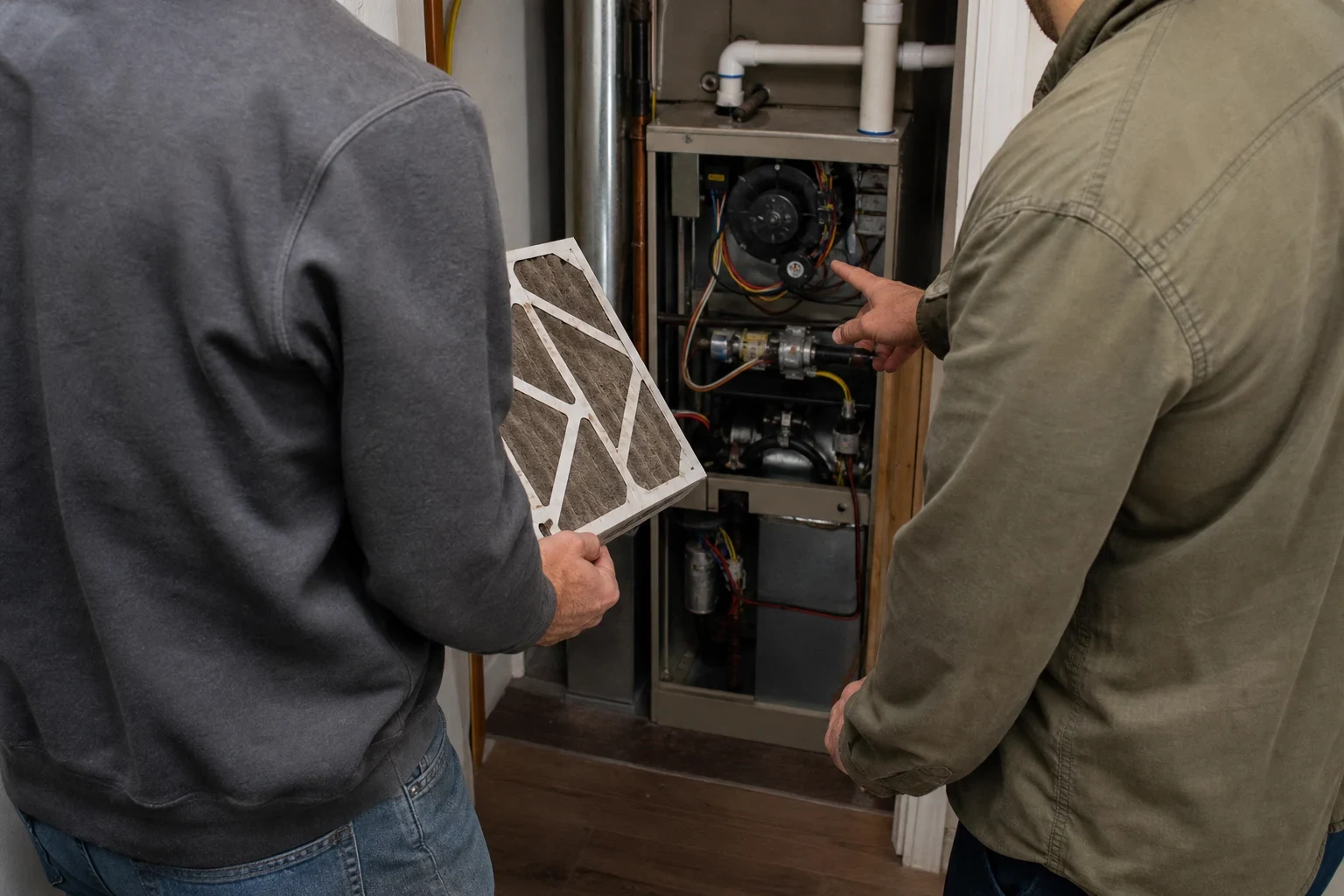
Signs it is time for a new air conditioner
- Repairs keep stacking up
- A second compressor or coil repair within a few seasons usually costs more over time than replacement. We lay out both options in writing so you can compare.
- The unit still runs on R-22
- Systems built before 2010 often use R-22, which is no longer produced. A refrigerant leak on one of these can make repair a poor investment.
- Rooms never cool on hot afternoons
- When late-summer heat settles over the West Plains and the unit runs nonstop without catching up, it may be undersized or losing capacity from a tired compressor.
- Bills climb while use stays the same
- Low efficiency ratings, fouled coils and failing fan motors all raise power draw. A newer, properly matched system uses less electricity for the same cooling.
- Your home has a furnace but no cooling
- Adding a condenser and coil to an existing furnace is often straightforward. We check whether your current ducts can carry the airflow before we recommend a size.
From Estimate to First Cool Air
- 1
Free estimate at your home
We check your existing equipment, ducts, electrical panel and outdoor space, measure for the load calculation and go over your choices. The quote is in writing before any work starts.
- 2
Ordering and permits
We order a matched condenser and coil, pull the permit if one is needed and pick an install date that suits you.
- 3
Installation day
We cover the floors on the way to the furnace, recover the old system's refrigerant and take it out. Next we set the pad and condenser, put in the coil, braze and pressure test the line set and pull the vacuum. Most replacements are done in a day.
- 4
Startup and testing
We charge the system, measure the temperature drop across the coil, check amp draw and static pressure and set up the thermostat. Before leaving, we show you how to swap the filter and what the system should sound like.
- 5
Inspection and ongoing care
We arrange the inspection and suggest a tune-up each year. With a maintenance plan, the coil stays clean and the charge gets checked, so the new system keeps its efficiency.
What moves the price of AC installation
Every quote is written for your home after we see it, and it lists equipment and labor line by line. The biggest swings come from system size, efficiency rating and how much of the existing setup can be reused. Estimates are free on installations and replacements.
- Tonnage and efficiency rating
- Larger capacity or a higher SEER2 rating costs more upfront but can lower monthly bills. Variable-speed units cost the most and control humidity best.
- Electrical upgrades
- Older panels may need a new breaker, disconnect or wire run sized for the condenser.
- Line set and coil condition
- Reusing copper lines saves money when they are the right diameter and clean. A coil that does not match the new condenser has to be replaced.
- Access and placement
- Tight attics, crawlspaces or a condenser location that needs a new pad or longer line set add labor time.
- Permit and inspection fees
- Fees vary by jurisdiction and appear as their own line on your quote.
Questions About AC Installation
- How long will the installation take?
- A simple replacement is usually done in a day. Putting central air into a house that never had it, or moving the condenser somewhere new, can stretch into a second day. Your quote includes the expected timeline.
- Could I swap only the outdoor unit?
- Occasionally, but most of the time no. Today's refrigerants run at different pressures than R-22, and the indoor coil must be rated for the condenser it is paired with. A mismatched set loses efficiency and usually fails sooner.
- How big a unit does my house need?
- A Manual J load calculation tells us. Square footage by itself is misleading, since insulation, window area, sun and air leaks all change the load. A unit that is too big cools quickly but cycles too often and leaves the air damp.
- Would a heat pump be a better choice than an AC?
- A heat pump cools the same way an air conditioner does and also heats, so your furnace can run less in spring and fall. Many homes keep a furnace for the coldest weeks alongside one. We can price both for you to compare, and if you go with the heat pump, we help with the paperwork to claim the Avista rebates and federal tax credits that apply.
- How do I make a new system last?
- Keep filters clean, keep the area around the condenser clear and schedule a yearly tune-up that checks the charge, cleans the coil and tests the capacitor. Our maintenance plans include that visit along with repair discounts and priority scheduling. Any repair it ever needs is covered by our 1-year labor warranty on all repairs.
Get a Free Estimate on Your New Air Conditioner
Tell us about your house and the system you have now, and we will schedule a visit to measure, inspect and put your quote in writing. If the old AC fails before then, the same number reaches our 24/7 emergency HVAC repair, and there are no emergency or after-hours fees.