ServicesCommercial HVAC
Commercial HVAC in Airway Heights
We service the rooftop units, gas-fired heaters and split systems that keep offices, shops and restaurants comfortable. Our focus is steady upkeep: clean coils, tight belts, calibrated controls and small repairs caught early, so the equipment you already own runs longer and breaks down less often.
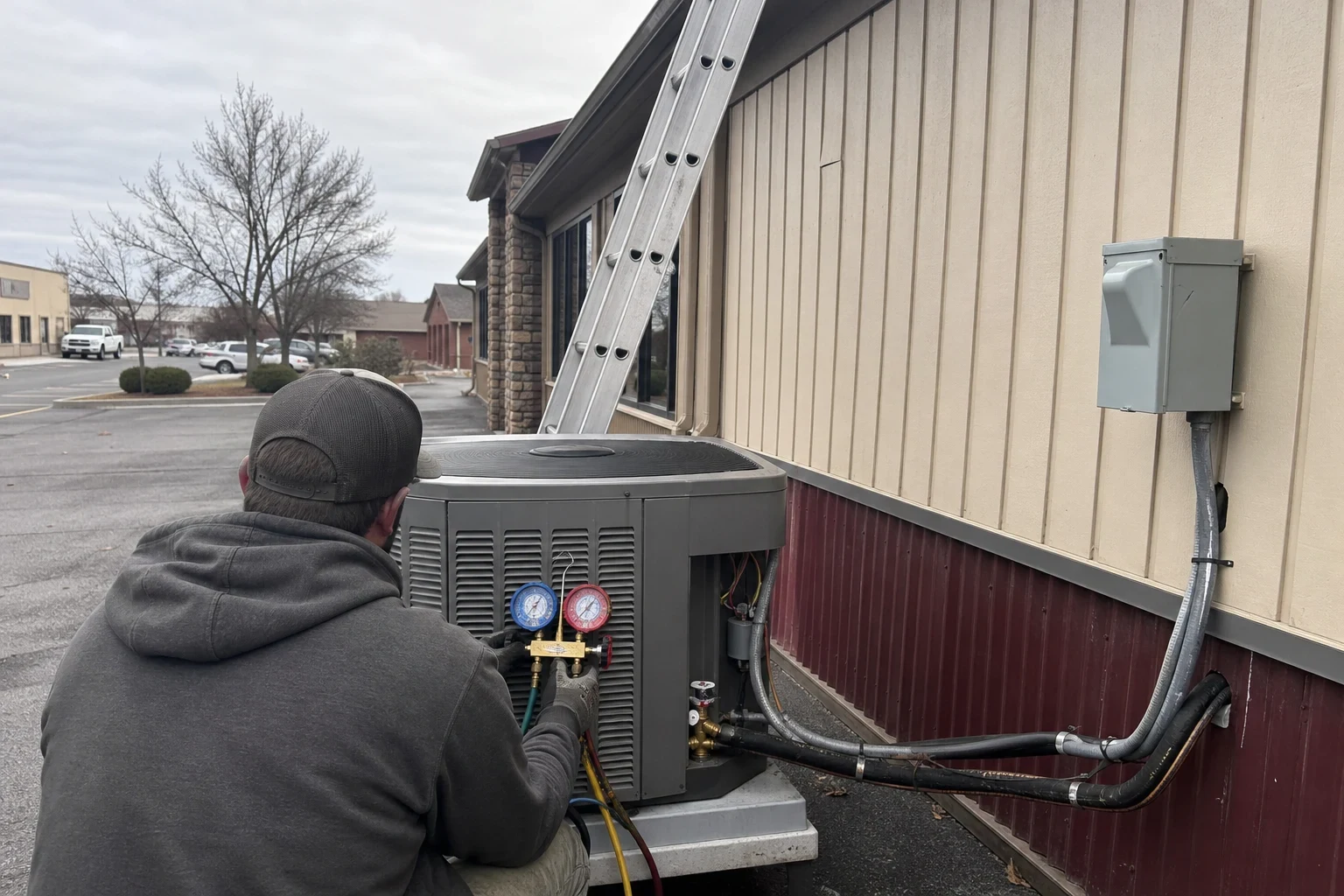
Keeping the equipment you already own in service
Most light commercial buildings run on packaged rooftop units: a compressor, condenser coil, gas heat section and blower in one cabinet. They sit outside year-round, collect dust and pollen on the coils in summer and run long heating cycles through eastern Washington winters. A unit that gets regular attention can stay in service well past the point where a neglected one needs replacing.
We work on that equipment as it stands. That means finding the actual failure, explaining why it happened and fixing the cause, not just swapping the part that quit. Nothing gets replaced until you have signed off on a written price that lists parts and labor, and whatever you paid for diagnosis comes off the final repair bill.
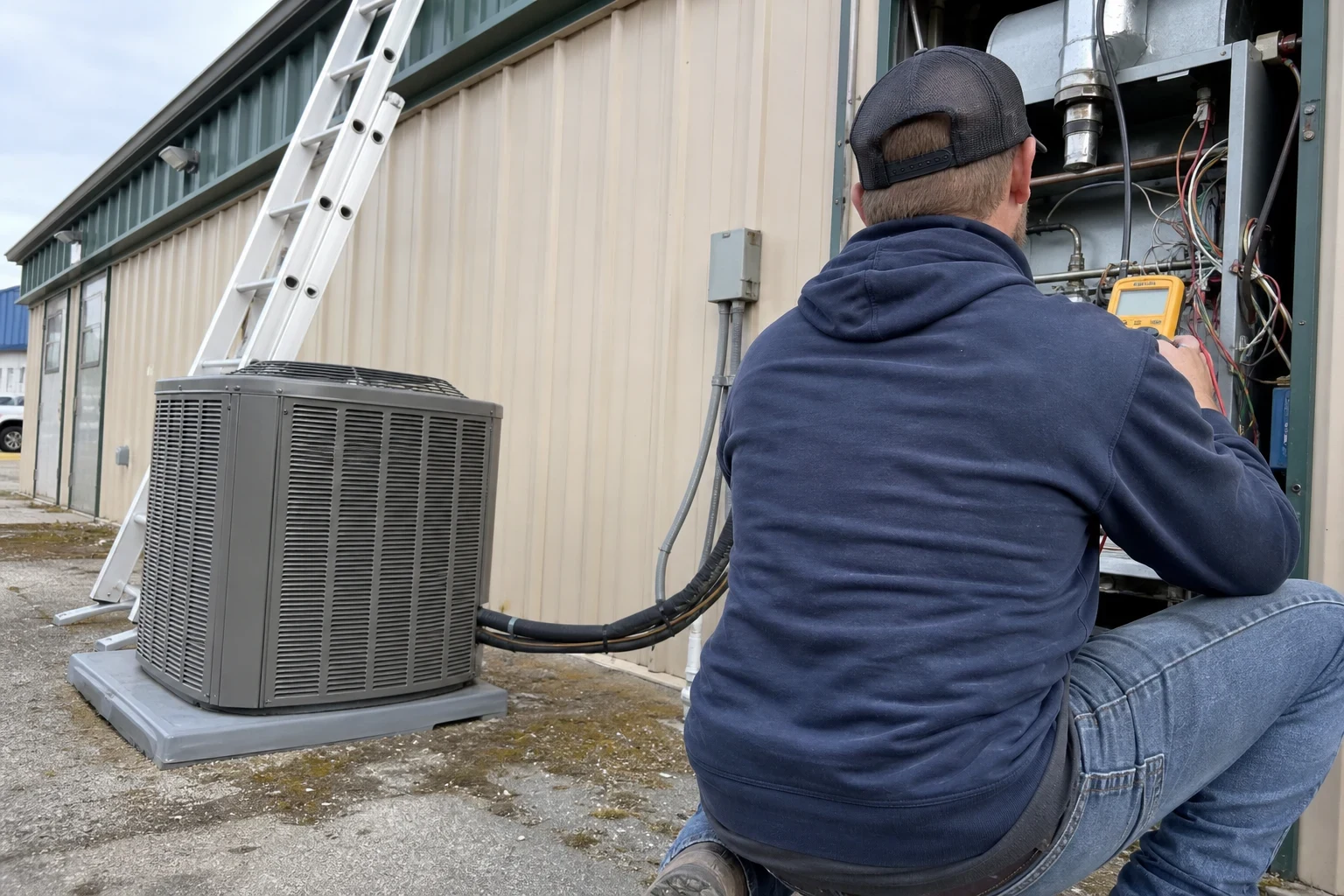
What our commercial work covers
- 01
Rooftop unit repair
We trace failures on packaged units to the part and the reason: a failed capacitor or pitted contactor, a seized condenser fan motor, a cracked igniter or a flame sensor coated in residue. You hear what broke and what caused it.
- 02
Gas heat sections and unit heaters
We inspect heat exchangers for cracks, check manifold gas pressure and test the rollout and high-limit switches that shut the burner down when something is wrong. Hanging unit heaters in warehouses and shops get the same checks.
- 03
Economizers and controls
A stuck economizer damper can pull in hot outdoor air all afternoon or freeze a coil in January. We test the actuator, the outdoor air sensor and thermostat programming so the unit uses outside air only when it actually saves energy.
- 04
Scheduled maintenance
Filter changes, belt tension and wear checks, coil cleaning, condensate drain clearing and refrigerant readings on a set schedule. We log amp draw and pressures each visit, so a motor working harder than it did last spring shows up before it fails. Our Maintenance Plans page covers how recurring service works.
- 05
Split systems and ductless units
Smaller offices and server closets often run split systems or ductless mini-splits. We service and repair those on the same visit as the rooftop equipment.
Questions about Commercial HVAC?
Call(509) 236-5329Signs your building's system needs attention
Zones that won't match
One end of the building runs cold while the other is fine. That often points to a failed heat stage, a bad zone thermostat or an economizer stuck open.
Utility bills climbing without a reason
Dirty condenser coils and slipping belts make a unit run longer to do the same work. The bill usually rises before anyone notices a comfort problem.
Squealing or grinding on the roof
A squeal at startup is usually a glazed or loose belt. Grinding can mean a failing blower bearing, which costs far less to replace before it scores the shaft.
Water stains on ceiling tiles
A clogged condensate drain or rusted pan overflows into the ceiling below. In summer it can also mean a frozen evaporator coil thawing out.
Short cycling
A unit that starts and stops every few minutes wears out its compressor and contactor quickly. Causes range from a poorly placed thermostat to low refrigerant charge.
How a commercial service call runs
- 1
Call and plan around your hours
Tell us what the unit is doing and when the building is occupied. For outages we answer 24/7, with no emergency or after-hours fees.
- 2
On-site diagnosis
We check in with whoever manages the space, then test the unit: line voltage, amp draw, refrigerant pressures, gas pressure and control signals. We photograph worn or failed parts so you see what we found.
- 3
Written quote before work
You get the repair in writing with parts and labor listed. If a unit is near the end of its life, we say so plainly and put the repair cost next to a replacement estimate.
- 4
Repair, test and clean up
We make the repair, run the unit through full heating or cooling cycles and confirm it holds setpoint. Old parts and packaging come off the roof with us, and you get a short note on what to watch.
What drives the cost of commercial HVAC work
Commercial repairs are priced from what we find at the unit, not from a flat menu. The diagnostic fee is credited toward the repair, and work starts only after you approve the written numbers. Estimates are free on installations and replacements.
- Unit size and type
- A large gas-electric rooftop unit has more components to test than a small split system. Tonnage and configuration set how long diagnosis and repair take.
- Roof and equipment access
- A fixed roof hatch is quick. Extension ladders, tight mechanical rooms or work scheduled before opening hours add time.
- Parts for older units
- Control boards and motors for discontinued models can take longer to source or need a compatible substitute. We tell you up front when that applies.
- Refrigerant type
- Units still running R-22 cost more to recharge, which often shifts the repair-or-replace math.
- Number of units on site
- Servicing several rooftop units in one visit cuts setup time per unit, so multi-unit buildings usually see a lower cost per unit on maintenance.
Commercial HVAC questions
Can you work around our business hours?
Yes. We schedule routine maintenance and non-urgent repairs early, late or on days that cause the least disruption. Most rooftop work happens without shutting down your space beyond the minutes a unit is powered off.
What coverage do you carry for work on our property?
We hold a Washington license and bond, and we carry $1M general liability insurance. Landlords and property managers usually ask for exactly those two things before approving anyone on the roof, and we can talk through them on the phone.
Is it worth repairing an older rooftop unit?
Often it is. A unit with a sound compressor and heat exchanger can run for years after a new fan motor or control board. If the compressor is failing, the heat exchanger is cracked or it runs on R-22, we give you both numbers and an honest recommendation.
What warranty comes with a commercial repair?
Our labor on every repair is covered for one year: a 1-year labor warranty on all repairs. Should a fix we made fail inside those twelve months, we return to correct it and you pay nothing for the labor.
How often should commercial units be serviced?
Twice a year suits most buildings: a cooling check in spring and a heating check in fall. Restaurants and dusty shop spaces usually need filters changed more often, sometimes monthly. We set the schedule from what we see on the coils and filters.
Keep your building's equipment running longer
Tell us what your units are doing and we will diagnose it, quote it in writing and fix the cause. Outages get a 24/7 answer with no after-hours fees.