ServicesAC Repair
AC Repair in Airway Heights
When your air conditioner hums without starting, blows warm air or ices over, we find the failed part and the reason it failed. You get a written quote before any work begins, a repair that protects the rest of the system, and no emergency or after-hours fees.
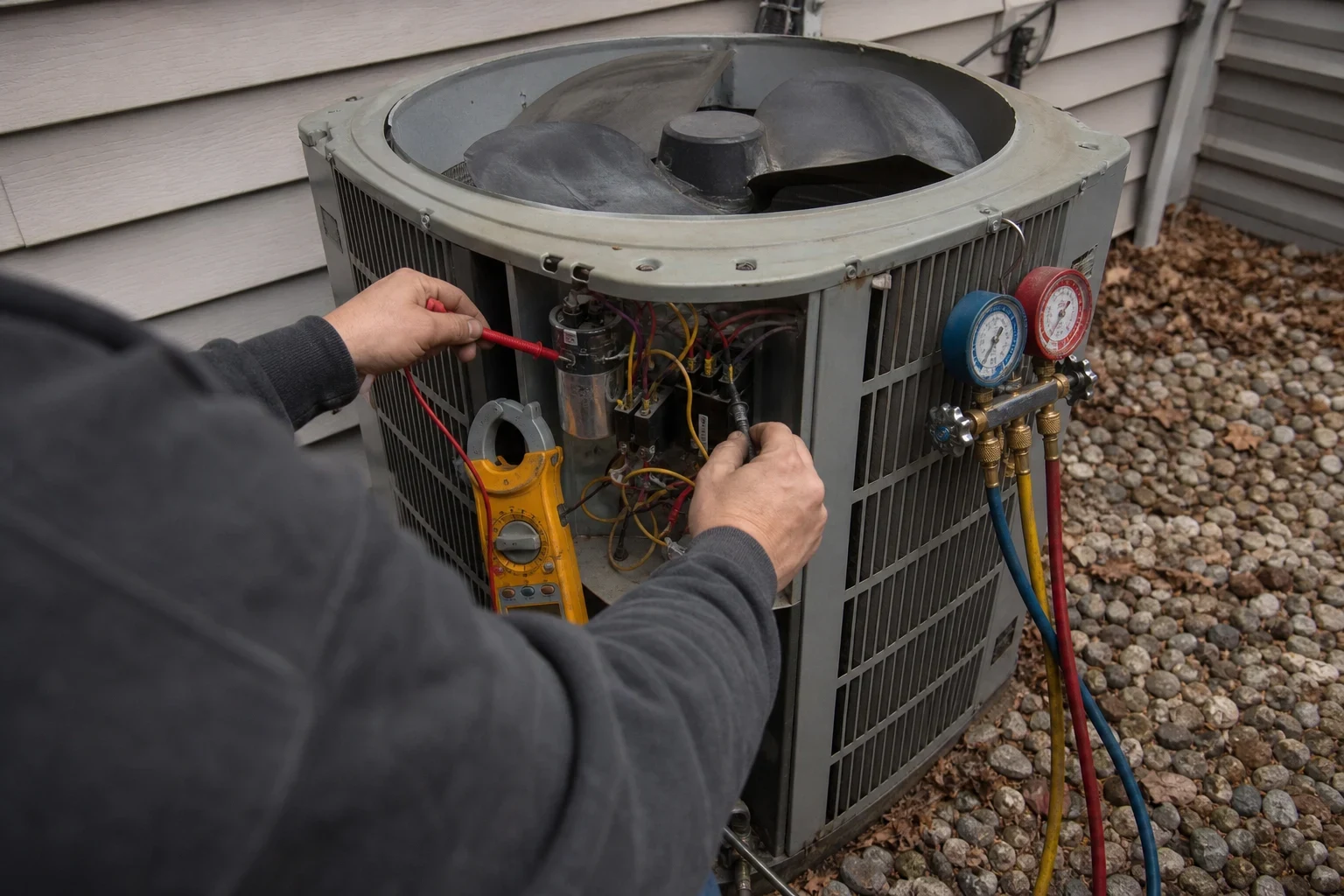
Repair the Part, Then Fix What Wore It Out
Air conditioners seldom fail in one moment. A run capacitor loses strength over several summers, a contactor's points pit until they stick, or a small refrigerant leak makes the compressor work harder each week. Swapping the bad part brings the cold air back. Learning why it went bad is what stops the next part from following it.
Our AC repair works that way. We take measurements, note what we find and put it in plain language, so you can judge whether to repair or whether AC installation is the smarter place to put your money. We hold a Washington license and bond and carry $1M general liability insurance while working at your home.
What an AC Repair Visit Covers
Electrical tests
We compare capacitor microfarad readings with the rating, look for pitting on the contactor and measure amp draw on the compressor and fan motor. Those readings point to the failing part and the ones close to failing.
Refrigerant checks
We take suction and liquid line pressures along with superheat and subcooling. A low charge means a leak, so we search the service valves, brazed joints and coil before any refrigerant goes in.
Airflow and coil checks
A dirty filter or matted condenser coil pushes head pressure up and makes the compressor run hot. We measure the temperature drop across the evaporator coil and wash the outdoor coil when it is blocking heat transfer.
Drain line and safety switch
We clean out the condensate line and test the float switch that stops the system when the pan fills. Plenty of no-cooling calls turn out to be a clogged drain that tripped this switch.
Thermostat and wiring checks
Before blaming any component, we make sure the thermostat is calling for cooling and follow the low-voltage wiring for worn insulation or loose terminals.
Signs Your Air Conditioner Needs Repair
Humming but not starting
The outdoor unit hums and the fan won't spin, or it spins only after a nudge. That usually points to a weak run capacitor. Left alone, it overheats the compressor windings.
Warm air from the vents
The fan runs but the air isn't cold. Causes range from a tripped outdoor breaker to a low refrigerant charge or a failed compressor, and testing tells them apart.
Ice on the lines or coil
Frost on the large copper suction line means the coil is too cold. Low airflow or low refrigerant is almost always the cause. Shut the system off and let it thaw before we arrive.
Short cycling
The unit starts and stops every few minutes. Each start stresses the compressor, so short cycling wears the most expensive part in the system fastest.
Water near the indoor unit
A puddle by the furnace or air handler usually means a clogged condensate line or a cracked drain pan. During smoky late summers, ash and dust settle in that water and speed up clogs.
Rising bills, same comfort
When the system runs longer to hold the same temperature, a dirty coil, a dragging fan motor or a slow leak is often to blame.
How a Repair Visit Runs
- 1
Your call and our questions
Let us know what the AC is doing and when it began. We answer 24/7, and a few details over the phone help us load the right parts on the truck.
- 2
Testing with real readings
The technician checks the electrical parts, the refrigerant circuit and the drain, then walks you through the numbers and the bad part. Once you approve the repair, the diagnostic charge is subtracted from the bill.
- 3
A written price
You get the cost on paper, split into parts and labor, before anything is removed. If the unit is old enough that the repair money would be better spent toward a replacement, we say so and explain why.
- 4
Fix and confirm
After installing the part, we run the AC and measure pressures, amp draw and temperature split again to make sure it is in spec. We tidy up and haul away the old parts.
What Moves the Cost of AC Repair
What a repair costs comes down to the part that broke and the work to reach it. Changing a capacitor and replacing a compressor are worlds apart. The price is in writing before we begin, and the diagnostic charge counts toward the repair when you approve it.
- Which part gave out
- Capacitors, contactors and float switches are inexpensive and quick to change. Fan motors, evaporator coils and compressors cost more for the part and take more hours.
- Refrigerant and where it is leaking
- R-22 is out of production, so recharging an older system that uses it costs more. A leak at a reachable valve is a fast fix, but one inside a coil may mean a new coil.
- How old the system is and its shape
- A single repair on a cared-for unit often buys years. On a tired system, we check whether other parts are about to go before you spend anything.
- Getting to the unit
- Working safely in a cramped attic or crawlspace takes longer than working in an open garage or basement.
AC Repair Questions
Something not covered here? (509) 236-5329
Will a night or weekend call cost more?
No. We charge no emergency or after-hours fees, so a midnight repair is priced just like a midday one. A written quote still comes before any work.
Does my repair come with a warranty?
It does. Every job is covered by our 1-year labor warranty on all repairs. If our workmanship fails within those twelve months, we come back and redo the labor at no charge.
Can I just top off the refrigerant?
An AC does not burn through refrigerant. A low charge means it is leaking somewhere, and adding more only postpones the problem while the compressor overheats. We locate the leak first, then lay out your choices to fix it or plan around it.
How do I decide between repair and replacement?
We weigh the system's age, what the repair costs against the years it has left, and whether other major parts are wearing out. When replacing is the better call, we show you the numbers, and installation and replacement estimates are free.
What stops the next breakdown?
Most of the failures we find come from dirt and heat: a plugged filter, a matted condenser coil or a weak capacitor that never got tested. A yearly tune-up finds them early, and our maintenance plans include tune-ups, discounts on repairs and priority scheduling.
Get Your Cooling Back and Keep It Running
Describe the noise, the warm air or the ice on the lines when you call. We track down the cause, put the price on paper and stand behind the labor for a full year.