ServicesFurnace Installation
Furnace Installation in Airway Heights
We replace worn-out furnaces with units sized to your home's measured heat loss, then set them up so yearly upkeep stays simple. The estimate costs you nothing, every line of the price is in writing before we touch anything, and we commission the system with recorded readings.
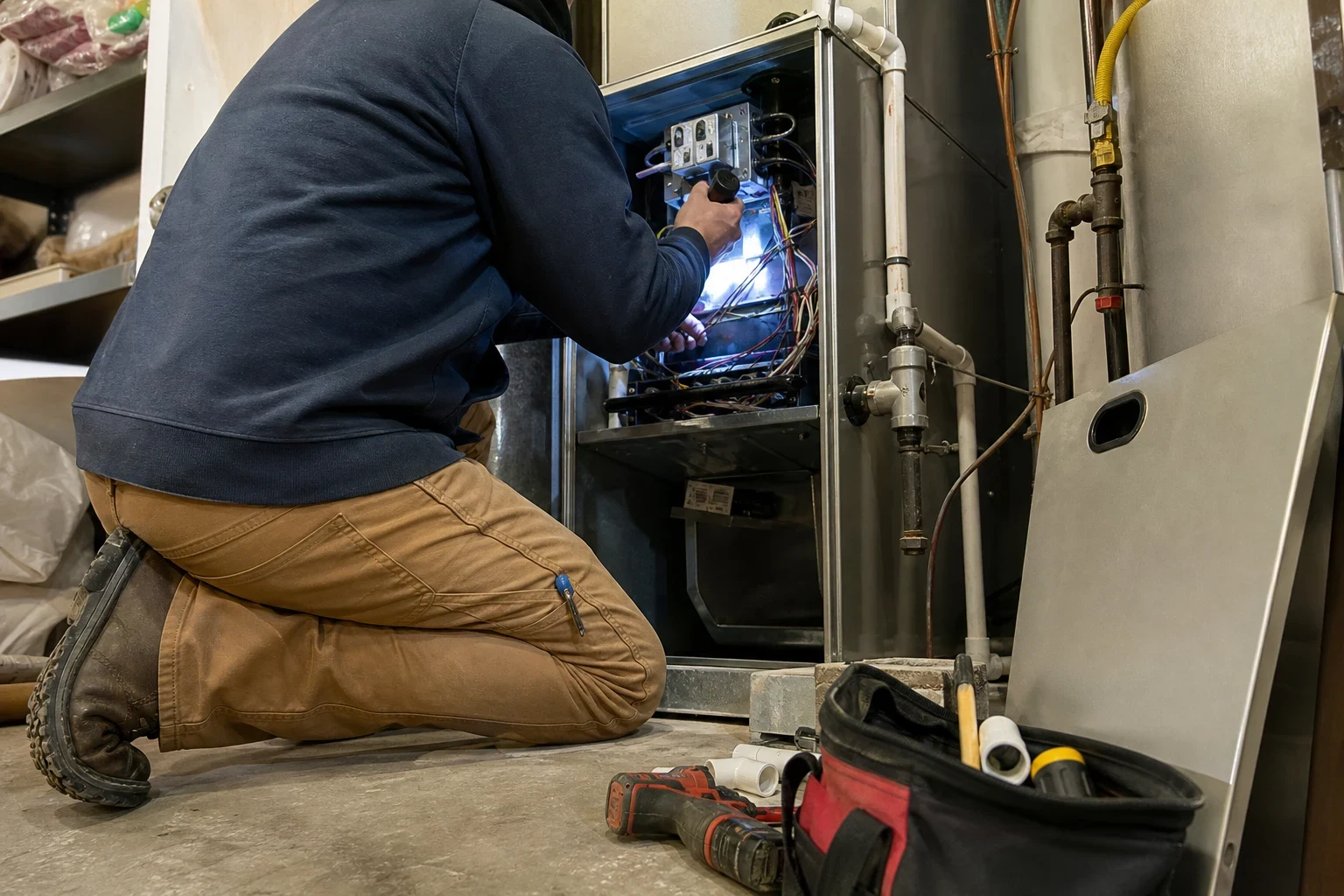
Furnaces installed for a long working life
How long a furnace runs depends on how well it is cared for, and that care begins the day it goes in. A unit that is too big turns on and off in short bursts, which strains the igniter and heat exchanger. Bad venting or a drooping condensate line cuts its life short too. We size, vent and start up each furnace so it has years of service ahead.
Plenty of older furnaces were bigger than the house needed, so we do not just match the old size. We run a load calculation room by room, then walk you through two paths: an 80% AFUE unit that uses the existing metal flue, or a 95% condensing unit with PVC venting and a condensate drain. Winter nights here fall into the teens and lower, so this choice affects both comfort and the gas bill.
HVAC Airway Heights holds a Washington license and bond and carries $1M general liability insurance, which covers the work we do in your house.
What comes with a new furnace install
Sizing by load calculation
We take measurements of the house and factor in insulation, window area and which way it faces to arrive at the BTU output it really needs. A furnace sized this way runs longer, steadier cycles and its parts wear more slowly.
Taking out the old furnace
We disconnect the old unit, carry it away and clean the spot before the new furnace goes in.
Vent pipe and condensate drain
On 80% furnaces we check the existing flue and liner. On condensing units we install PVC intake and exhaust lines with the correct pitch and clearances at the termination, and we trap the condensate drain so water cannot back into the furnace.
Gas, power and thermostat hookup
We tie into the gas line with a new shutoff valve and sediment trap, wire the unit to its circuit and set the thermostat to work with the furnace's stages.
Startup with recorded readings
We measure manifold gas pressure, temperature rise through the heat exchanger, static pressure and combustion. Those figures are the starting point we compare against at every tune-up after.
Permit and inspection handled
We obtain the mechanical permit the job requires and book the inspection, so your new furnace is recorded and meets code.
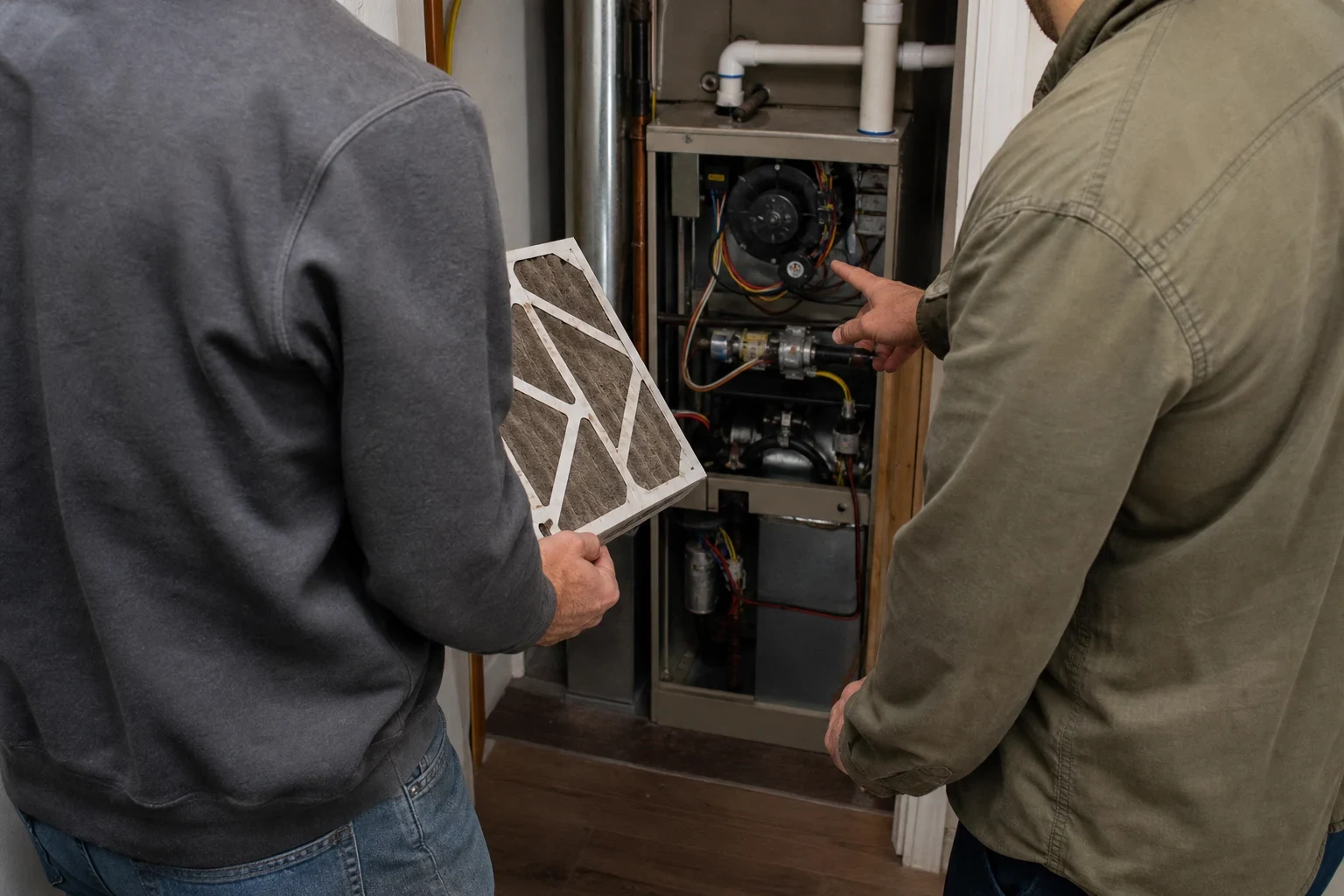
When a furnace is ready to be replaced
- 15 to 20 years or older
- Years of heating up and cooling down wear out a heat exchanger, and parts for older models become scarce. By this point a big repair can eat up much of what a new unit costs.
- Cracks in the heat exchanger
- A cracked heat exchanger can leak combustion gases, carbon monoxide among them, into the air you breathe. This is usually when we advise replacing instead of repairing.
- A repair every year
- When igniters, inducer motors or control boards keep getting replaced season after season, that money may do more toward a new furnace.
- Cold rooms or higher gas bills
- Rooms that stay cold, frequent short cycles and bills that climb while your habits stay the same often mean a tired or wrongly sized furnace is losing efficiency.
- Burner flames that are yellow or lifting
- A good gas flame burns steady and blue. A yellow, flickering or lifting flame points to a combustion problem a technician should check right away.
The steps of a furnace install
- 1
A free estimate at your house
We look over the existing furnace, flue, gas supply and space, do the load calculation and talk through your choices. If repairing is the better move, we tell you.
- 2
The quote in writing
Before work starts, you receive a written quote that lists the equipment, venting, permit and labor. Nothing is added unless you approve it.
- 3
The day of the install
We cover the floors along our path, turn off gas and power, pull the old furnace and set the new one. Most swaps take one day, and the house goes without heat for just a few hours.
- 4
First firing and a walkthrough
We start the furnace, log the startup readings and show you how to change the filter, where the condensate drain goes and how to use the thermostat. Then we book the permit inspection.
What changes the price of a furnace install
We price each install from what we see at your house, not from a printed list. The items below have the biggest effect on the total. The estimate is free, and every item is spelled out on the written quote.
- Efficiency and burner stages
- A 95% condensing unit costs more to buy than an 80% model but uses less gas. Two-stage and modulating burners raise the price and give quieter, steadier heat.
- Changes to the venting
- Moving from an 80% to a 95% furnace calls for new PVC vent pipe out a wall or roof plus a condensate drain. Keeping a flue that is in good shape holds the cost down.
- Where the furnace sits
- Swapping a furnace in a cramped closet, attic or crawlspace takes longer than one in an open garage or basement.
- Gas line and electrical fixes
- A gas line that is too small, a worn shutoff valve or no dedicated circuit must be brought up to code.
- Permit and inspection fee
- The fee for the mechanical permit is included in the job and listed separately on your quote.
Common questions about new furnaces
- How do I know whether to repair or replace my furnace?
- It comes down to age, the shape of the heat exchanger and the repair price. For a furnace younger than about 12 years with a common part out, a repair is usually worth it, and our furnace repair page explains that service. An older unit, a cracked heat exchanger or a repair every season usually points to replacing it. We show you our findings and answer plainly.
- Which suits my house better, an 80% or a 95% furnace?
- A 95% unit gets more heat out of the same gas, and that savings grows over our long winters. It requires PVC venting and a condensate drain, so the job depends on the furnace location and where the vent can go out. When the current flue is sound and venting a condensing unit would be hard, an 80% furnace can be the right fit. We quote both side by side.
- Do you charge for the estimate?
- No. Estimates on installations and replacements are free. We visit, measure, look things over and hand you a written quote, and you are under no obligation.
- My old furnace stopped in midwinter. What now?
- Call us at any hour. Our emergency HVAC repair runs 24/7 with no emergency or after-hours fees. When the furnace can be repaired safely to carry you through, we repair it, and we can discuss replacing it after the house is warm.
- What helps a new furnace last?
- Replace the filter when it is due, keep the space around the furnace and its vent openings clear, and book a yearly tune-up. That visit tests the flame sensor, igniter, inducer, condensate trap and combustion against the readings we took at startup. Our maintenance plans include the yearly tune-up, and any later repair carries our 1-year labor warranty on all repairs.
Ready to plan your new furnace
We will measure your home, check the venting and gas supply, and give you a written quote you can read through at your own pace. The estimate costs nothing.