ServicesMaintenance Plans
Maintenance Plans for Airway Heights HVAC Systems
With a plan, your furnace, air conditioner or heat pump gets looked after on a set calendar: cooling in spring, heating in fall. Each visit cleans, measures and tests the parts that wear, so the equipment you have now runs for more years at a lower cost.
Upkeep That Keeps Your Existing Equipment Working
Most HVAC failures start small. A capacitor loses capacity a little each season, a flame sensor collects a film of oxidation, a condensate line slowly fills with algae. None of these stop the system on day one. They make it work harder until a motor overheats or a safety switch shuts it down on the coldest night of the year.
A plan catches that wear on our schedule instead of yours. We visit before each season, record readings like temperature split, amp draw and gas pressure, and compare them to the last visit. When a number drifts, we tell you why and what it means, and you decide what to do about it.
It suits anyone who wants a system to reach the end of its rated life instead of being replaced early. If your equipment is already failing, start with AC Repair or Furnace Repair, then add a plan once it is running right.
What Each Tune-Up Covers
- 01
Furnace combustion and safety
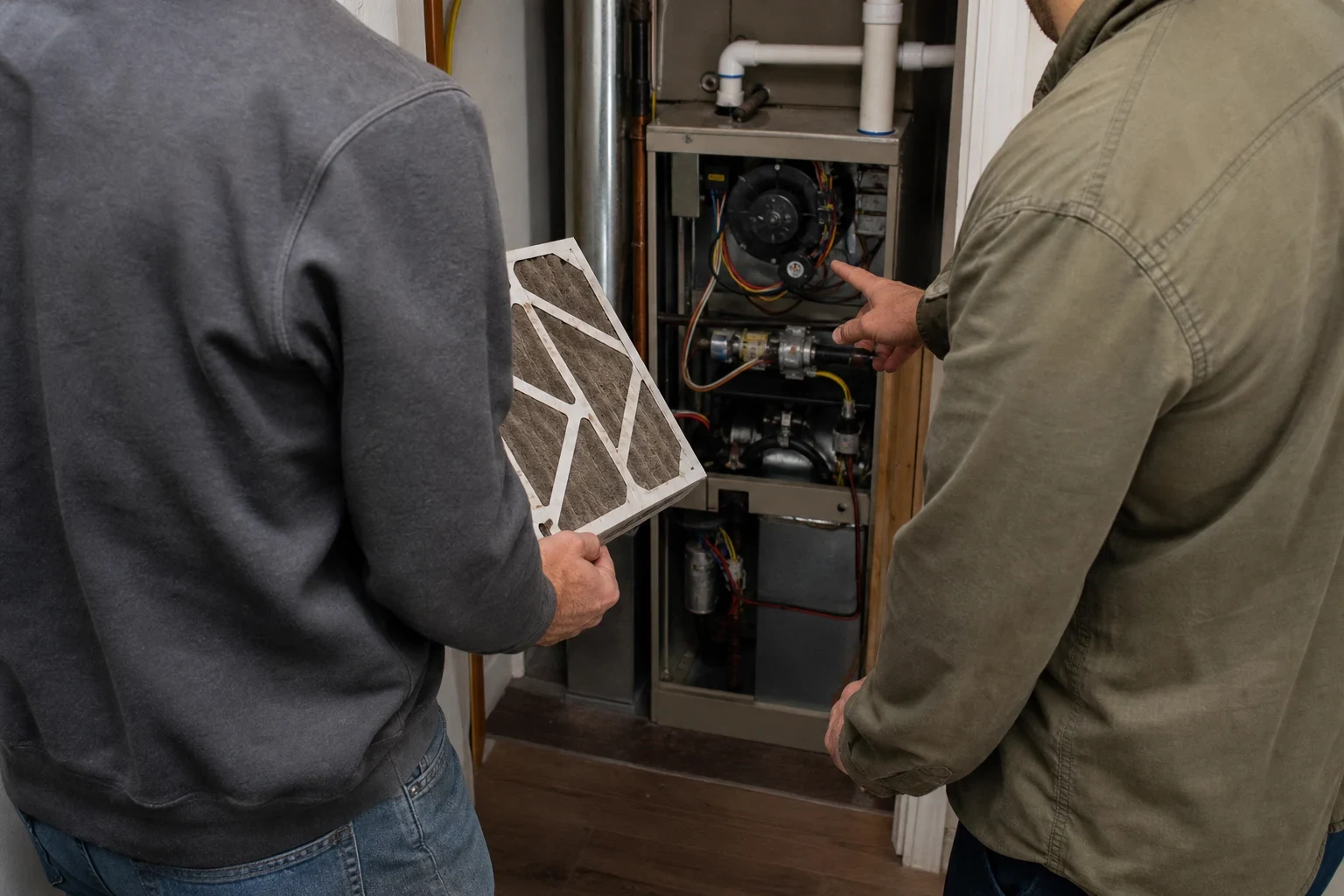
We look over the heat exchanger for cracks, clean the flame sensor, test the hot surface igniter and check the inducer motor and pressure switch. Gas pressure and the flue get checked too, since a furnace that vents poorly is a carbon monoxide hazard and not only a waste of gas.
- 02
Condenser and outdoor coil care
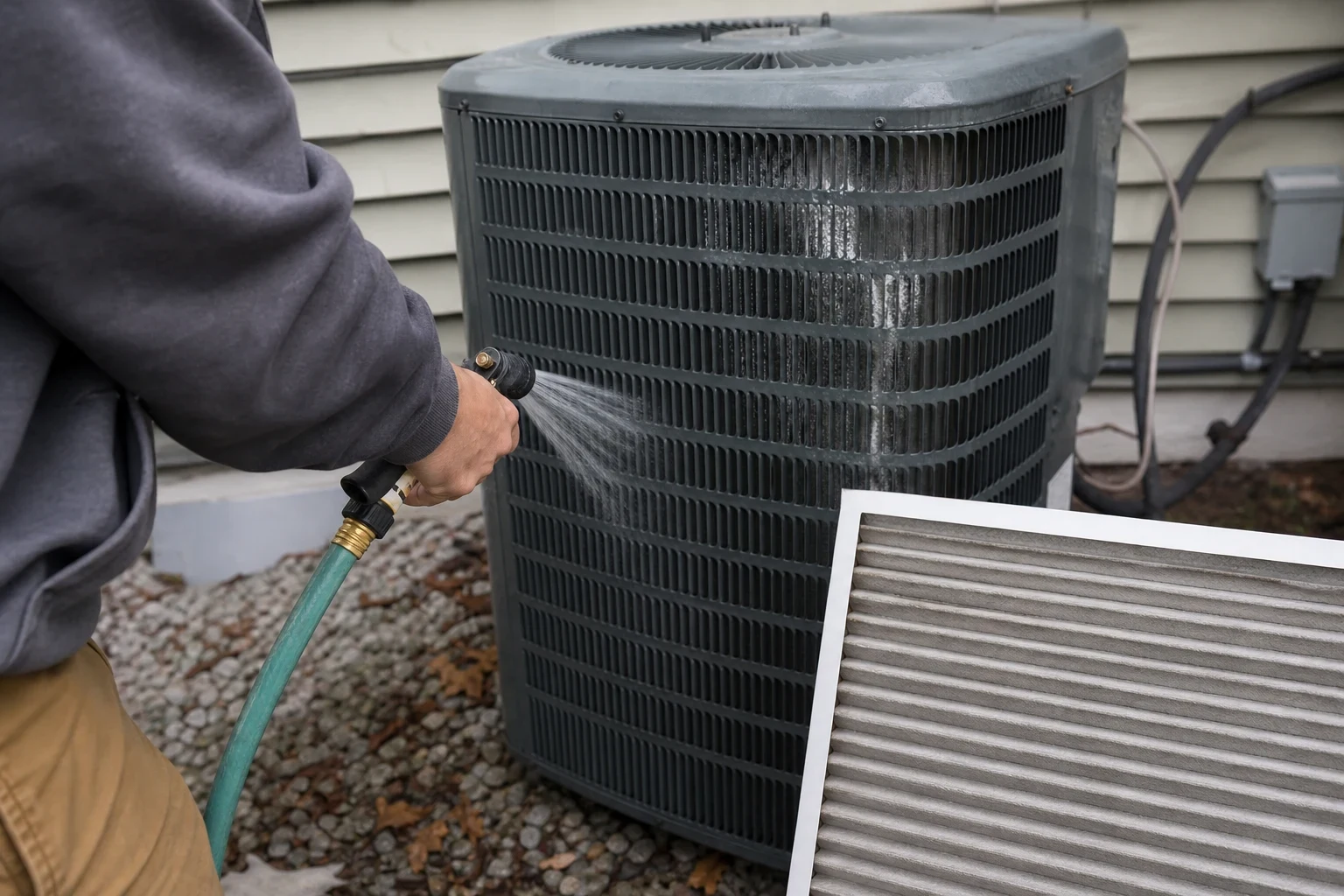
Dust, cottonwood fluff and grass clippings pile up on the outdoor coil. We wash it, comb out bent fins and test the fan motor so the compressor is not running hot against a blocked coil.
- 03
Electrical parts checked
Capacitors are measured against their microfarad rating, the contactor is checked for pitting and terminals are tightened. A weak capacitor ranks among the top reasons compressors and blower motors die early.
- 04
Refrigerant readings
We read pressures and work out superheat or subcooling to confirm the charge. If the numbers run low, that signals a leak, and we explain it before doing anything else.
- 05
Drain line, filter and blower wheel
We flush the condensate line, test the float switch, check or change your filter and look for buildup on the blower wheel that chokes airflow.
- 06
Defrost test on heat pumps
Heat pumps get a reversing valve and defrost control test, because a unit that cannot shed ice in winter quickly loses heating output.
Questions about Maintenance Plans?
Call(509) 236-5329Signs Your System Is Due for Maintenance
More than a year since the last service
If nobody can recall the last tune-up, the coils, capacitors and flame sensor have gone at least one hard-working season without a check.
Bills going up, comfort staying the same
A clogged filter and dirty coils stretch out every run cycle. You usually see it on the bill well before any part quits.
Quick on-off cycles
When a furnace fires, runs for a minute and stops, the cause is often a dirty flame sensor or a limit switch tripping from heat. Both get handled in routine upkeep.
Dripping by the indoor unit
Water near the furnace or air handler usually points to a condensate line that is starting to block. Caught now, it takes minutes to clear. Ignored, it can shut the system down or ruin flooring.
Unfamiliar sounds when it starts
A hum before the outdoor fan turns, or a squeal from the blower, tends to mean a weakening capacitor or worn motor bearings.
How a Plan Visit Runs
- 1
Visits booked before each season
Plan members get priority scheduling. Your cooling check lands before summer heat and your heating check before the first hard freeze, ahead of the rush of breakdown calls.
- 2
Cleaning and checks
The technician goes down the checklist on the indoor and outdoor equipment, cleaning and testing along the way. Depending on the system, a visit usually runs one to two hours.
- 3
Numbers logged and explained
Every measurement goes on record so the next visit can be compared with it. We tell you in plain words what we saw, including parts that are wearing but still working.
- 4
Repairs quoted in writing first
When a part needs replacing, you get a written quote before any work starts. We change nothing until you approve it, and plan members pay a discounted repair price.
What Affects the Cost of a Plan
What a plan costs depends mainly on how many systems we care for and what type they are. A gas furnace with a split AC needs a different visit than a heat pump backed by a furnace. We talk through the choices by phone so the price is clear before we ever come out.
- How many systems you have
- An extra furnace, a separate AC serving an addition or a ductless mini-split each bring more parts to check and clean.
- What kind of equipment it is
- A heat pump works all year and needs reversing valve and defrost checks that an AC alone does not. Dual-fuel systems get both sets of heating checks.
- How old and worn it is
- On older systems, the first visit can run longer while we clean coils that have been skipped and take starting readings.
- Filters and parts
- Some systems take standard filters and some take thick media cabinets. Specialty filters and any repair parts are priced on their own.
Maintenance Plan Questions
How much is a plan, and what comes with it?
Plans start at $14.99 a month. That covers your seasonal tune-ups, a reduced price on repairs and a place near the top of our schedule. The exact plan depends on how many systems you have and what kind, and we can sort that out with you on the phone.
Is a visit twice a year really needed?
If your home has heating and cooling, it is. A furnace and an AC wear in different ways, and checking each before it is needed leaves time to fix problems without a rush. A heat pump runs in both seasons, so two visits matter even more.
What if a tune-up turns up a problem?
We show you the part and the reading that caught our attention, and you get a written quote before anything is done. An approved repair carries our 1-year labor warranty on all repairs, and plan members pay less for it.
Does a plan help with my manufacturer warranty?
Many manufacturers ask for proof of regular professional maintenance before they cover parts. We record every visit and its readings, so you have that proof if a claim ever comes up.
Who comes to my home for these visits?
HVAC Airway Heights holds a Washington license and bond and carries $1M general liability insurance. Our technicians put on shoe covers inside and clean up the work area before they go.
Put Your System on a Schedule
Let us know which furnace, AC or heat pump is in your home, and we will walk through which plan fits and what gets checked at each visit. Between visits, the same number reaches us for repair at any hour.