ServicesNew Construction HVAC
HVAC for New Homes in Airway Heights
For new homes, we design, install and fire up the heating and cooling. Each system gets sized by load calculation, placed where a technician can get to it, and tested before move-in day so it runs efficiently for a long time.
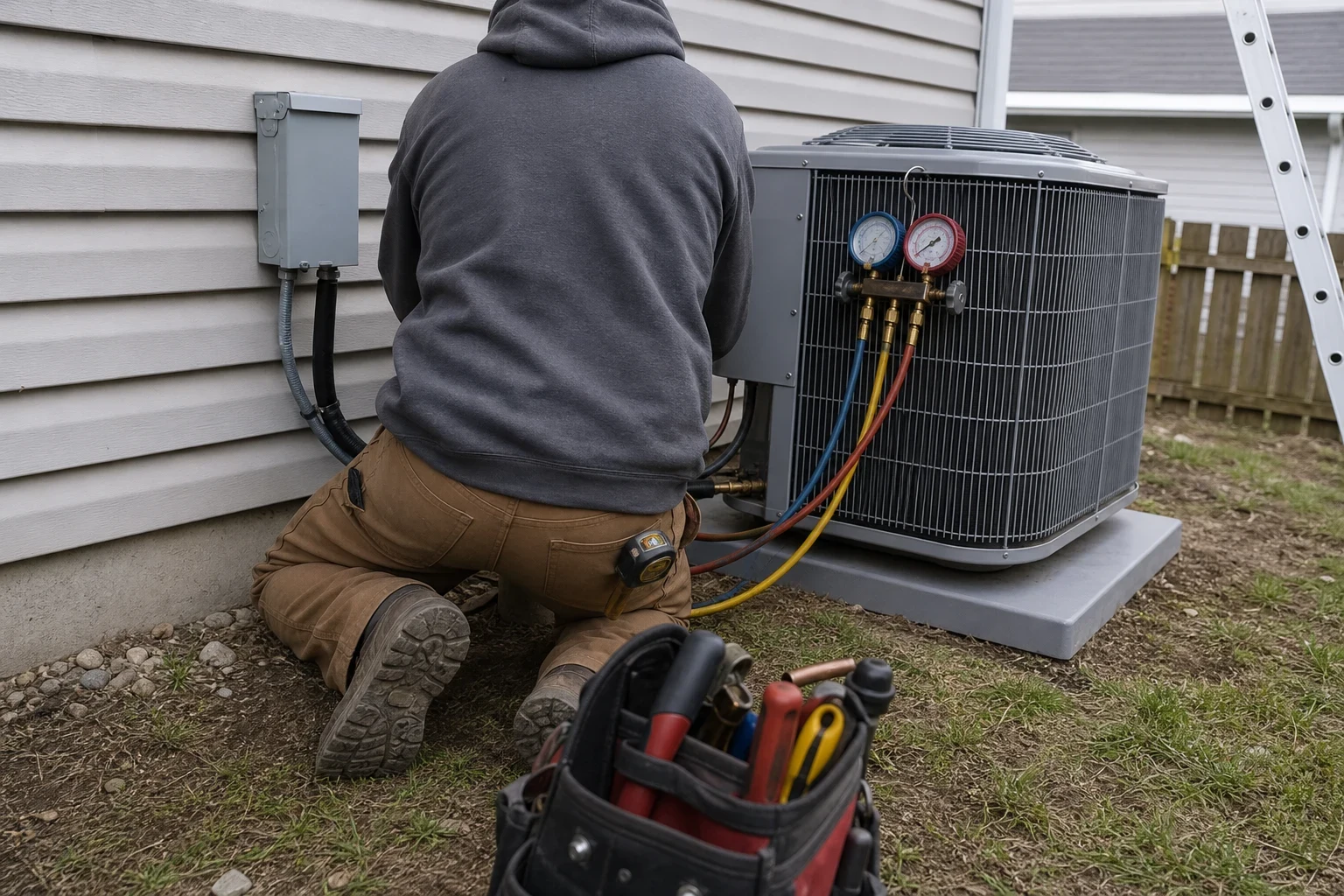
A system planned for the next twenty years
The cheapest time to make an HVAC system easy to maintain is before the drywall goes up. Once walls close, a furnace jammed into a closet with no room to pull the blower, or a condenser tucked under a roof valley, becomes a cost you pay at every service call. We plan new installations around how the equipment will be cared for, not just how fast it can be set.
We work with builders and owners on custom homes, additions and new single-family builds. We select the furnace, air conditioner or heat pump, run the refrigerant line set and condensate drain, handle venting and controls, and start the system up with measured readings. Winters here regularly drop well below freezing, so we size the heating side for real design temperatures rather than a rule of thumb.
What our new construction work covers
Sizing from a load calculation
Working from your plans, we figure the heating and cooling loads using insulation values, glass area and which way the windows face, plus how tight the house is. Equipment that is too big turns on and off constantly, wears out its igniter and compressor early and leaves some rooms warmer than others, so square footage alone does not set the size.
Choosing the equipment
We go over gas furnaces, central air, heat pumps, and ductless mini-splits for a bonus room or shop. You hear what each efficiency rating means and how each option holds up to years of service. For heat pumps, we help with claiming Avista rebates and federal tax credits.
Placement that leaves room to work
The furnace or air handler goes in with enough space to pull the blower assembly and change the filter by hand. The outdoor unit sits level on a pad, away from roof runoff and drifting snow, with space around it for coil cleaning.
Refrigerant lines, drains and vents
Refrigerant joints are brazed and pressure-tested with nitrogen, and the lines are pulled to a deep vacuum before the charge goes in. Condensate drains are sloped so water keeps moving, and high-efficiency furnace vents follow the maker's length and clearance specs.
Thermostat, safeties and first start
After wiring the thermostat and safety controls, we fire the system and write down gas pressure, temperature rise, refrigerant charge and static pressure. Every later tune-up gets compared to those numbers.
When to bring us into a new build
Plans are still being drawn
This is the best moment to call. Mechanical closet size, chase locations and outdoor unit placement are still easy to change on paper.
Your builder's bid has one line for HVAC
A single lump sum with no equipment model, no load calculation and no efficiency rating gives you nothing to compare. We provide a written quote before any work begins, broken out so you can see what you are buying.
You want a heat pump or mini-splits
Heat pumps need cold-climate sizing and a plan for defrost drainage, and mini-splits need head locations chosen early. Both are far simpler to get right before framing is finished.
An addition needs its own comfort zone
A new wing or above-garage room often sits too far from the existing furnace to heat evenly. A dedicated system or ductless unit can serve it without overloading what you already have.
How a new construction job runs
- 1
Plans, load numbers and a free estimate
We go through your drawings, work out the loads and suggest equipment. Installation and replacement estimates cost nothing, and the quote comes to you in writing.
- 2
Permit and framing-stage rough-in
With the mechanical permit in hand, we rough in while the framing is open: where the equipment sits, line set routes, drains, vent openings and control wire. The rough inspection gets booked next.
- 3
Setting the equipment
Once the drywall is up, we place the furnace or air handler and the outdoor unit, finish the connections and seal each opening through the outer walls and roof.
- 4
First start and final inspection
We commission the system, log its operating numbers and show you how to change filters and set the thermostat. We are there for the final mechanical inspection or set it up with your builder.
What moves the price of a new system
New construction pricing depends on the house and the equipment, so we quote from your plans rather than a per-square-foot guess. The written quote lists each item, and nothing gets added without your approval.
- Size and heating load
- Larger homes and homes with more glass need more capacity. A tight, well-insulated build can often use smaller, less expensive equipment.
- Equipment type and efficiency
- A high-efficiency condensing furnace, variable-speed heat pump or multi-zone mini-split costs more up front than a single-stage unit, but can lower operating costs. Heat pump rebates and tax credits can offset part of the price.
- Number of zones
- Each additional zone adds equipment, controls and labor. Some homes need it, and many do not.
- Site and schedule
- Long line set runs, roof penetrations and builder delays that require extra trips all affect labor. Coordinating early keeps return visits to a minimum.
New construction HVAC questions
Something not covered here? (509) 236-5329
Will you coordinate with my general contractor?
We do. Rough-in and equipment dates get lined up with your builder, and we fit inspections into their schedule. A copy of the written quote and the startup readings still goes to you.
Are you licensed and insured for new home work?
Yes. We hold a Washington license and bond and carry $1M general liability insurance. Every system we put in goes under a mechanical permit, so an inspector checks it at rough-in and again at final.
Is a heat pump or a furnace the better pick for a new house here?
That comes down to the heating load, which fuels you can get and how you like to run the house. Pairing a cold-climate heat pump with a backup gas furnace covers our coldest nights well, and we help with claiming Avista rebates and federal tax credits on the heat pump. We lay out the numbers for each so you can compare.
Who do I call if something breaks after we move in?
Call us for a diagnosis. All repairs come with a 1-year labor warranty, and the readings we took at startup give the technician a starting point that speeds up troubleshooting. If you lose heat overnight, our 24/7 emergency HVAC repair line picks up, with no emergency or after-hours fees.
What keeps a new system in good shape?
Swap the filter when it is due and book a tune-up every year. Maintenance plans start at $14.99 a month and come with tune-ups, discounts on repairs and priority scheduling, so the system can last its full service life.
Plan the heating and cooling before the walls close
Talk through your plans with us by phone and we'll cover sizing, equipment and placement. You'll get a free, written quote before any work begins.